普通の外にいくつかの著名な品質を持っている、と畏敬の念を起こさせるあるいかなるビーイングは、カミと呼ばれています。

三島神社
Tōkyō-to, Taitō-ku, Shitaya 3-7-5
Mishima Jinja
東京都台東区下谷3-7-5
February 4, 2026
Nearest station: Iriya Line: Hibiya subway (J)


Enshrined Kami:
Main
(Note: numbers in parentheses after kami names
refer to position in How Many Kami table)
Ōyamatsumi-Kami 大山祇神
Others
Yamatotakeru-Mikoto 和足彦命
Mishimahime-Mikoto 身島姫命
Kamitsuhime-Mikoto 上津姫命
Shimotsuhime-Mikoto 下津姫命
In-ground Subordinate Shrines:
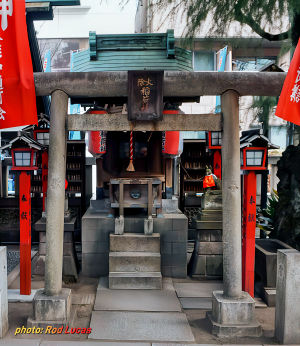
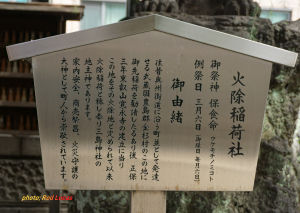
Hiyoke Inari Jinja 火除稲荷神社
Annual Festival: Nearest Saturday and Sunday to June 14 and 14

This Mishima Jinja has essentially the same origins as Motomishima JInja. For my readers' convenience I have duplicated the origin in the following paragraph.
<The origins of this shrine date to 1281. An immediate vassal of the Kamakura Shogunate, Kawano Michiari (河野通有), was about to lead troops during the second Mongol invasion of Japan and he prayed for success at a local shrine, Oyazumi Jinja. His prayers were answered and he was successful at what became known as the Battle of Koan (弘安の役) in 1281. He subsequently had a dream in which he was instructed to build a jinja in Toshima district, Musashi Province enshrining the spirit of Oyazumi Kami. This he did. The Oyazumi Kami enshrined through the bunrei process was the one at Oyazumi Jinja in Shikoku. >
This shrine was also founded using the bunrei process as described in the Motoshima Jinja page. Its guji (chief priest) have for several generations been descendants of Kawano Michiari.
There is one difference. The Mishima Jinja homepage tells us that when Kawano Michiari set off to fight the Mongols he was led by the shrine's divine messenger, a white heron. This is not mentioned in the Motomishima Jinja homepage.
The subsidiary jinja, Hiyoke Inari Jinja, is the Land Kami ( 地主神, jinushikami) for the area. Traditionally, every area of land has its own guardian deity, possibly reflecting a belief that land is a manifestation of the divine. When the shrine was founded is unclear, but it is thought to have been established by the Tokugawas to protect against fire disasters in the area. ”Hiyoke” means protection against fire.
Click images to expand