普通の外にいくつかの著名な品質を持っている、と畏敬の念を起こさせるあるいかなるビーイングは、カミと呼ばれています。

Kanagawa-ken, Yokohama-shi, Kohoku-ku, Morooka-cho 1137
神奈川県横浜市港北区師岡町1137
(Japanese)
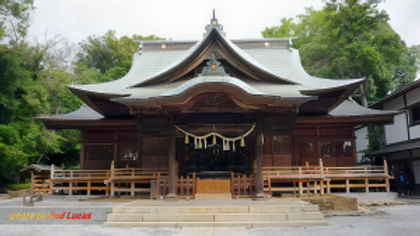
師岡熊野神社
Morooka Kumano Jinja
Nearest station: Okurayama Line: Toyoko (TY15)


(Note: numbers in parentheses after kami names refer to position in How Many Kami table)
Enshrined Kami:
Main
Kotosakao-no-mikoto 事解男命
Hayatama-no-o-no-mikoto 速玉之男神
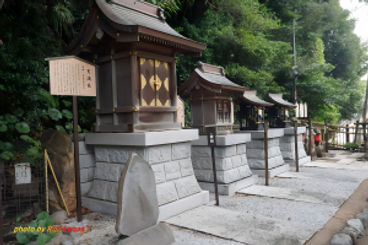
In-ground Subordinate Shrines:
Benzaiten 弁才天
Jinmei-Sha 神明社
Inari-Sha 稲荷社
Tenman-Sha 天満社
Hakusan-Sha 白山社
Ishi-Sha 石神社
Hie-Sha 日枝社
Annual Festival: August 24
ご利益
Luck in competitions/gambling (勝負運, Shobu In)
Luck at work (仕事運, Shigoto-un)
Luck with health (健康運, Kenko-un)
I visited this shrine at the suggestion of Michael Plastow because of its football connections. Unfortunately its football memorabilia all seem to be gathered in the shrine museum and that was closed for renovation when I visited. The only football-related thing I could find was this charm (御守り).
The shrine describes itself on its home page as "the centre of Kumano faith in the Kantō region and the guardian shrine for northern Yokohama". Along with Kameido Katori Jinja in Tokyo’s Koto-ku it is one of the two football-related "power spots" in Kanto.
In 885 an imperial envoy visited the shrine and presented it with an imperial scroll on which was written "Kumano Shrine, the most renowned sacred site in the Kanto region". After that the shrine became an imperial prayer site for four emperors, Uda, Daigo, Suzaku, and Murakami, who reigned successively from 887 to 967. A ceremony held at that time, to divine whether that year’s harvest would be good or bad, the Tsutsugayu Ritual (筒粥神事) is still being held today, although it should be noted that this festival is widespread throughout Japan.

In June 1351 the shrine’s main hall was destroyed by a lightning flash, but fortunately the shintai and some of the shrine’s treasures escaped damage. Most important among the latter was a document dating from 1347 describing the shrine’s history. In 1489 a feudal lord granted the shrine some land using 御朱印地(goshuin-chi, ‘seal-endowed lands”) and at least three Tokugawa Shogun followed suit: Ieyasu in 1600, Iemitsu in 1642, and Ietsuna in 1665.
In 1868, in accordance with the Shinbutsu Bunri Act, Hokkeji Temple was separated from the shrine. It It was designated a Prefectural Shrine in 1870, but following petitions from local residents it became a Village Shrine covering 33 villages three years later. In modern times much maintenance and construction work was caried out, culminating in the two phases of the Heisei Grand Restoration in 2005 and 2014.
click images to expand