普通の外にいくつかの著名な品質を持っている、と畏敬の念を起こさせるあるいかなるビーイングは、カミと呼ばれています。

Tōkyō-to, Meguro-ku, Shimomeguro 3-1-2
November 7, 2025
大鳥神社
Otori Jinja
東京都目黒区下目黒3-1-2
Nearest station: Meguro Lines: JR Yamanote (JY22J), Subway Namboku (N01


Enshrined Kami:
Main
(Note: numbers in parentheses after kami names
refer to position in How Many Kami table)
Yamato Takeru-no-Mikoto 186E 日本武尊
Kuninotokotachi-kami 国常立神
Ototachibana-hime-Mikoto 弟橘媛命
In-ground Subordinate Shrines:
Meguro Inari Jinja 目黒稲荷神社
Annual Festival: The nearest Saturday and Sunday to September 9
Otori Jinja is the oldest shrine in Meguro-ku. It is situated on an intersection of the busy Meguro-dori and Yamate-dori highways; the intersection is called Otori Jinja.
During the reign of Japan’s 12th emperor, Keikō (r. 71-130), a small jinja dedicated to Kuninotokotachi-Mikoto is said to have existed on the current location of the shrine. After Emperor Keiko’s son, Yamato-Takeru, had fulfilled his father’s instructions to subdue the Kumaso people of southern Kyushu and the Emishi people of northern Honshu, he visited the jinja to offer thanks for his successful campaigns. He also prayed for the successful recovery of one of his subordinates who was suffering from an eye disease. The disease was cured and the jinja became known as Mekuragami(盲神, lit. Blind God). “Mekura” gradually morphed into “Meguro,” giving the area its name. In acknowledgement he dedicated two swords he was carrying to the shrine, the Totsukagami and Tsunagatagami. The swords are known as “Amenotake-gumo-no tsurugi, 天武雲剣” and are now one of the shrine’s treasures.
I was a little confused when I first read this. I have not been able to find 天武雲剣 in either the 神道史大辞典 (Large Dictionary of Shinto History) or on the Internet. Only the second kanji of the name 天武雲剣 is different from 天叢雲剣: the latter is read as Ame-no-Murakumo-no-Tsurugi and is translated as the “Sword of the Gathering Cloud of Heaven.”: This sword, one of the Three Imperial Regalia, occupies a prominent place in Shinto mythology and is the shintai at Atsuta Shrine in Nagoya. It was given to Yamato-Takeru by his aunt, Yamatohime-no-mikoto, the founder of Ise Jinja. Yamato-Takeru was the one who dedicated the two swords which became 天武雲剣 to Otori Jinja. (Perhaps some readers more erudite than myself can help clear up my confusion). Shrine legend tells us that after this Yamato-Takeru’s spirit manifested itself in the form of a white bird and is venerated as Torimyojin “Bird Deity”.
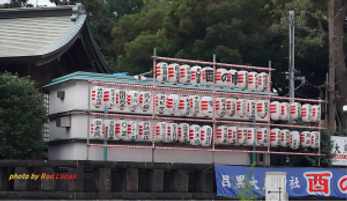
In 806 the shrine’s main hall was completed and it is to this year that the shrine dates its origin. A map drawn in 1457-1460 when Edo Castle was being constructed under Ota Dokan’s guidance, and the oldest map of Edo, identifies this shrine as Torimyōjin. The map only shows nine shrines. In the Edo Meishi Zue published in 1834-1836 the shrine is identified as Otori Daimyo Jinja. The current shrine buildings date to 1962, and its 1200th anniversary was celebrated in 2006. The shrine’s celebration of the Tori-no-Ichi (酉の市) festival is one of the most popular in the city. Tori, rooster, is the tenth sign of the Chinese zodiac, and Tori days occur every twelve days in November. This year the festival will be celebrated on Wednesday Nov 12th and Monday Nov 24th. Otori Jinja held its first Tori-no-Ichi festival in 1836.
click images to expand



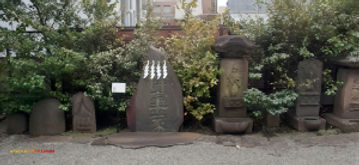
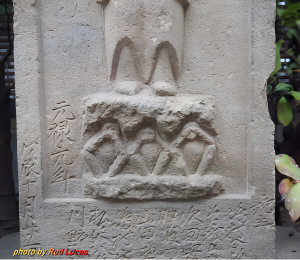
Koshin-To



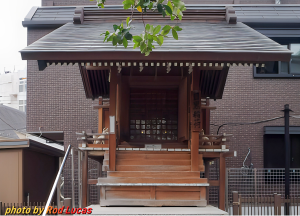
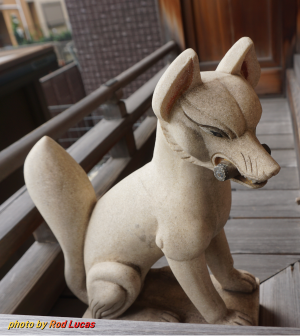
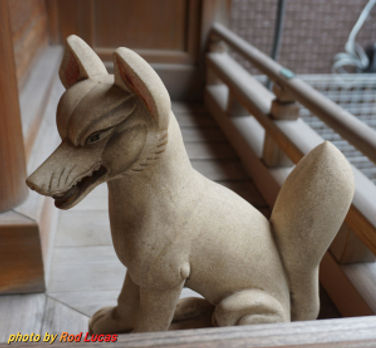
Meguro Inari Jinja



Preparations for Tori-no-Ichi Festival


